
Not hard to reach, systems are hard to trust: what Black Maternal Mental Health Week 2026 left us with
As the sixth annual Black Maternal Mental Health Week (led by The Motherhood Group) draws to a close, our Health and Social Impact Director, Kristy Ebanks shares her thoughts. I keep coming back to this year's Black Maternal Mental Health Week theme:' Three words that ask us to hold hope and accountability at the same time.
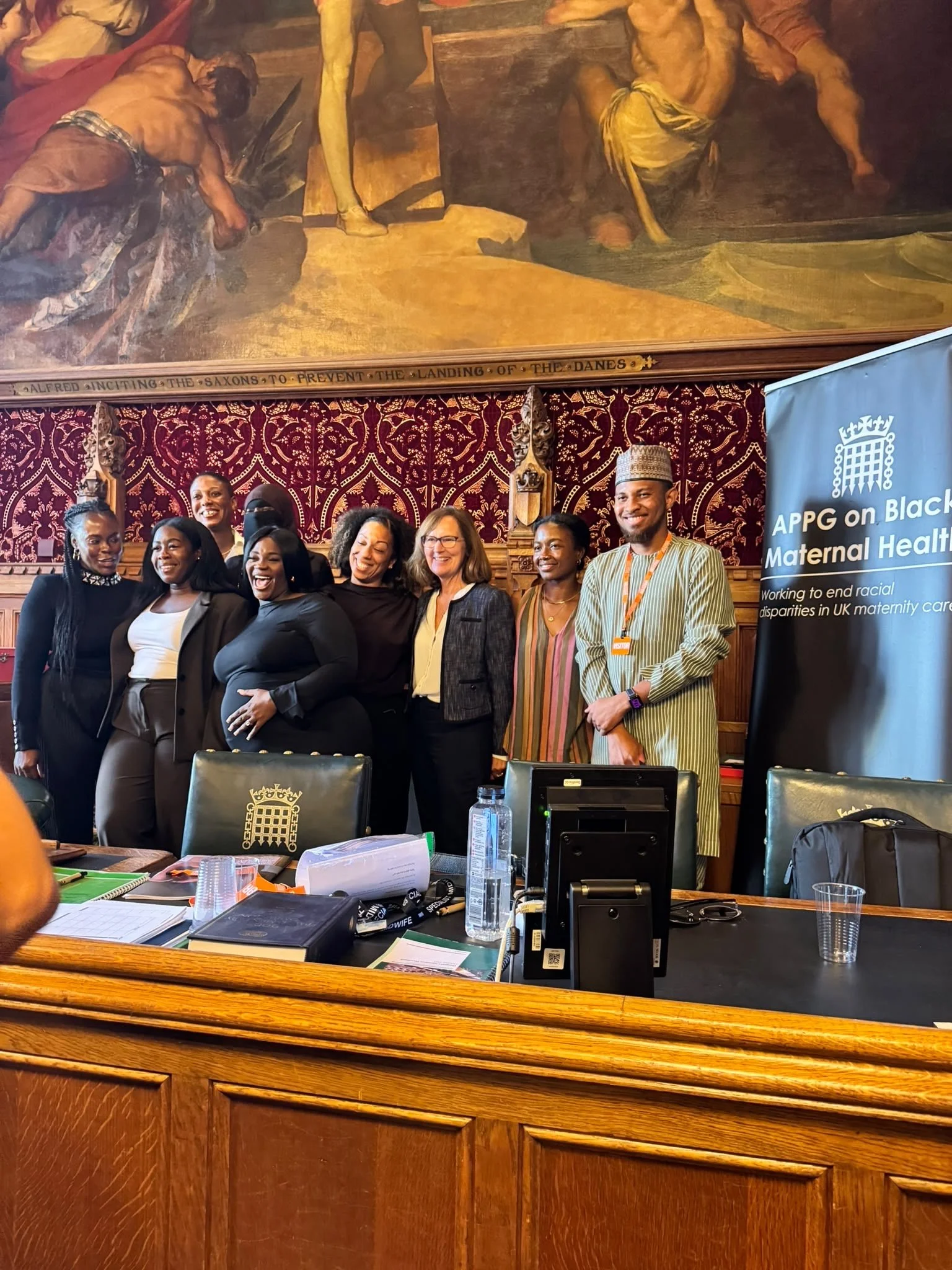
This week, I went to the House of Commons for the APPG on Black Maternal Health, alongside mothers, advocates, community leaders and MPs, to discuss the findings of Five X More's latest Black Maternity Experiences Report. I left with a lot of notes and a clear sense that the conversation about Black maternal health has to widen.
For years, the headline has rightly been mortality. The latest MBRRACE-UK report shows Black women are still nearly three times more likely than white women to die during pregnancy or in the weeks after birth. That figure should never become background noise, but death is not the only measure of harm. When Five X More’s earlier research landed, it became clear that mental health was the part of the story no one was properly counting, so its founders (Tinuke Awe and Clotilde Abe) went and counted it.
What they found is shocking. Despite experiencing mental health strain before and after giving birth, nine in ten women were never referred to a mental health professional. Let that number sink in… Nine in ten. And the MBRRACE data shows why that gap matters so much: mental health conditions, including suicide, are among the leading causes of maternal death, and suicide is the leading cause of death between six weeks and a year after birth. Mental health is part of the conversation on mortality, rather than separate from it.
Trauma follows women home
One line from the discussion has stayed with me: ‘trauma doesn't stop at the door of the delivery room. It follows women home’. It follows them into the neonatal unit, where many mothers described their mental health being shaped by their baby's condition, and into the weeks and months after, when the appointments slow down and the support thins out.
We heard again and again that women are being asked to disclose trauma in systems that don't have the capacity or tools to respond when they do. Frankly speaking, that’s extraction being framed as care. As one speaker put it, safety for Black mothers is still an aspiration rather than a standard.
Trust is the red thread
If there was one word that came up more than any other, it was trust. From the consent process to describing symptoms, women spoke about maternity care as an environment of distrust. And without trust, women don't disclose. Without disclosure, there's no referral. Without referral, there's no help.
Healthcare is relational. It's a two-way relationship, and right now too many Black women feel they are holding up their end alone. In the wrong hands, a lack of engagement might be seen as a failure of Black women to speak up but it’s actually a reflection of wider societal inequality showing up, as it always does, in our health system.
Not hard to reach
I want to repeat something said in the room, because it deserves to be said everywhere: Black women are not hard to reach. The system is hard to trust.
Getting that right means recognising that "Black" is not one group. Black women in the UK come from distinct communities, cultures and histories, and services need the cultural fluency to reflect that, right down to how surveys are translated and framed. It means understanding that in some communities, needing space or struggling with your mental health can feel like a personal failure, and designing support that meets women there rather than waiting for them to arrive at a clinic door.
And it means investing in the workforce:
Midwives need more time
Recruitment needs to reflect the communities being served
Cultural fluency needs to be a priority, not a training module
What needs to change
We hear over and over again that this is a systemic failure, and what that tells me is it needs a systemic response: investment in the wider system that treats mothers and babies as a genuine priority, mental health referral pathways that actually work, and a workforce given the time, tools and cultural fluency to build trust.
As one of the speakers said, ‘women are one half of society, and they give birth to the other half. How we care for women and babies shapes us all’.
This week was about joy, justice and journey. The joy is in the community I saw this week, the journey is long and the justice is still owed. change to The week was about joy, justice and journey. The joy is in the community I saw last week, the journey is long and the justice is still owed.