
Top Takes From YMS 2026 (Part 1)
Thanks to our friends at Pion for a jam-packed agenda at this year's YMS (Youth Marketing Strategy) conference. As expected, the talks were a masterclass in how brands can best connect to younger audiences, which are doing it well (and which aren’t), plus informative insights on how the ever-evolving tech updates are changing the way young people engage with media and brands.
We can’t cover it all, but here are some of our favourite takes from the day’s discussion.
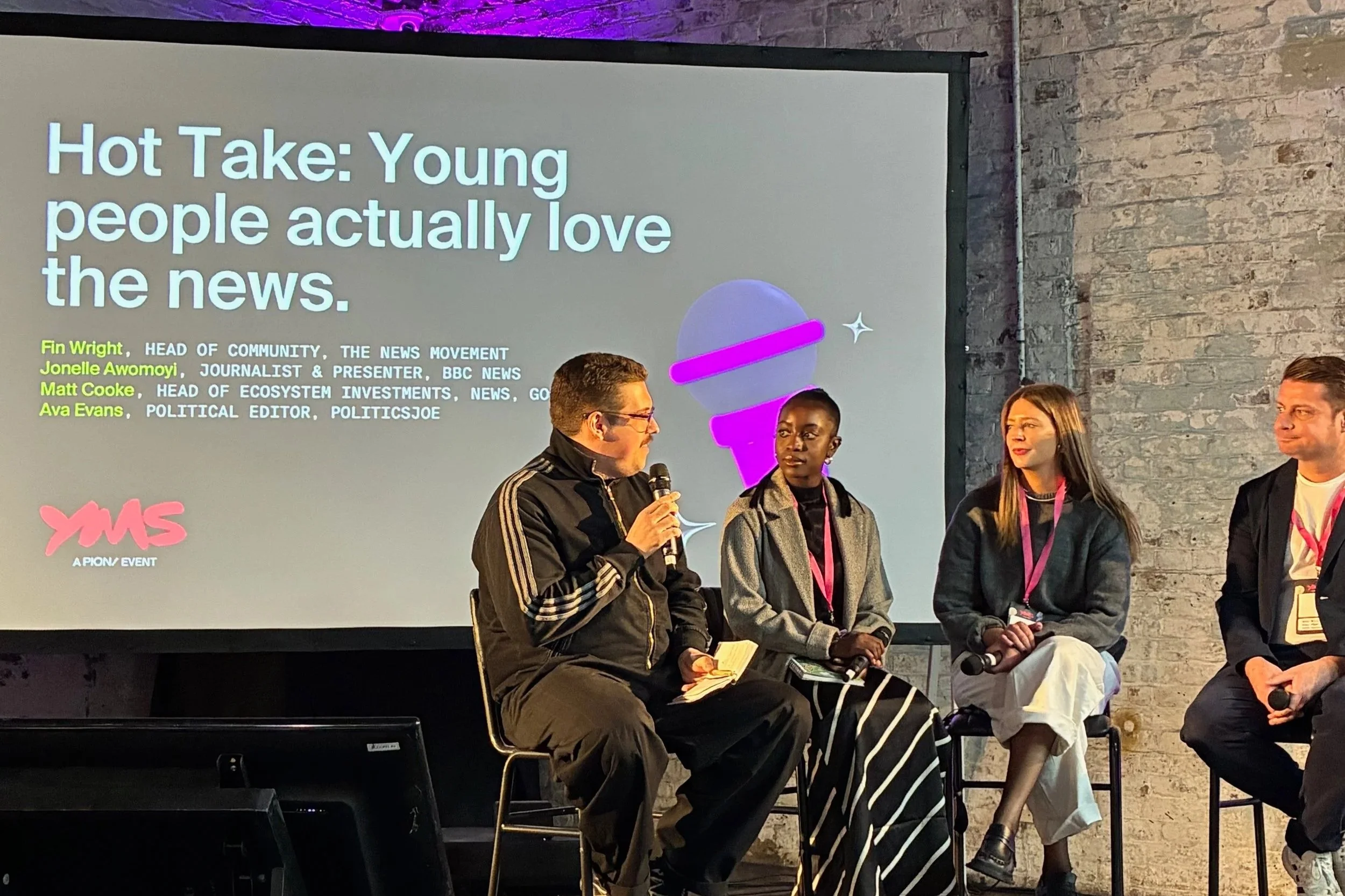
First up: Young people love the news.
Top take #1: Young people are interested in the news, but what counts as news has changed.
Whether or not young people are interested in the news is not a novel debate or the question here, because we’ve already agreed the answer is YES. However, Jonelle Awomoyi, a Presenter at the BBC, notes that young people love news, but what is considered news has changed.
News is no longer confined to what’s covered on breakfast shows or 6 pm TV announcements. Now, it can include anything from celebrity breakups and influencer dramas to which animal in some faraway zoo has captured the hearts and eyeballs of millions online (cc Moo Deng, Chinese dogs on the run, allegedly).
Young people are willing and wanting to engage, but we need to consider that what they’re most interested in doesn’t fit the definition of news you might have in mind. As with many things, no one-size-fits-all.
This takes us back to the underlying question: who decides what’s considered news? Perhaps it's ever-evolving, but one thing we can be sure of: news is often what gets attention, and what gets attention has the potential to become news. We see this loop often: videos on social platforms can rack up millions of views and make it onto mainstream media, showing the power of social engagement to dictate the agenda of traditional news outlets.
So yes, young people actually love the news, but it just might not be the news you’re thinking of.
Top take #2: Journalists reaching young people must toe the line between authority and authenticity to gain their attention
In a world where misinformation is rife and can spread like wildfire, it’s never been more important to maintain journalistic credibility. But to engage younger audiences, adopting formats used by influencers and content creators has become more commonplace as news outlets seek to meet them where they are and integrate into their feeds.
It comes as no surprise, as recent research by Sprout Social found that 67% of Gen Z listed social media as one of their top three sources of news, with 51% saying they want news organisations and reporters to be more active on social media.
Content needs to straddle essential news guardrails (be informative and factual) whilst being packaged for optimal platform-based performance (be entertaining, knowing you have only three seconds to grab your audience). For example, Politics Editor at JOE, Ava Evans, notes they’ve adopted lo-fi edits on visuals to boost algorithm performance and tested influencer formats or content themes (e.g. ‘what I do in a day’) for news content.
So how can news outlets cut through on social media? It’s certainly a challenge. News outlets need to maintain the authority associated with their titles or media houses, but ultimately, social media platforms are, first and foremost, entertainment platforms. For news to translate, content needs to be conversational, and audiences want authenticity through personalities they can connect with.
Legacy media, good luck. The social revolution is upon us.
Top take #3: Gen Z aren’t just the current trending sub-culture, they’re the next generation of your audience
This might sound obvious, but to say, as a brand or a news platform, if you capture Gen-Z now, gain their trust and maintain it, then you’ve secured your future audience.
Matt Cooke, Head of Ecosystem Investments, News at Google noted, from recent research they conducted, 65% of Gen-Z will return to you once built that relationship. He challenges the idea that young people only read headlines, noting that brand loyalty isn’t just about maintaining followers but growing an engaged audience that is more likely to read deep dives, engage with long-form content and have their point of view shaped by your platform.
The rise of Substack is an example of this, with brands, influencers and celebrities maximising their already-engaged audiences via long-form content. Its growing popularity shows that you can hold young people’s attention for more than 3 seconds, but they really need to like you for it to happen.
Everything from branding, content, and accessibility is key to fostering interest and trust among young audiences. Brands should be topical and reactive; aesthetically branded and visually pleasing; authentically tap into what Gen-Z are interested in; and, most of all, patient.
Building trust takes time, but it’ll pay off in dividends down the line.
Stay tuned for part two, more insights to come!
