
The Fashion Of Football
Every World Cup produces its own visual culture. Beyond football itself, the tournament becomes a meeting point for fashion, politics, internet culture and identity, offering a snapshot of how people choose to express themselves on a global stage.
This summer has been no different. From customised shirts and designer collaborations to political dress and new forms of fandom, fashion has become one of the clearest ways people participate in the tournament. Below are some of the cultural moments that have stood out to us.
The tournament has become a growing platform for self-expression
Football has always had a close relationship with street style. Rooted in working-class communities, the sport has long moved between the pitch, the pub and the high street. Shirts were never confined to matchday. They became part of everyday wardrobes and, over time, a canvas for reinterpretation.
Claude Lévi-Strauss described bricolage as creating with whatever is available. Football fashion follows a similar logic. Long before replica shirts were widely available, supporters customised their own clothing, supporters customised their own clothing, a tradition that continues today.
Independent designers are expanding football's visual language in new directions. Afta Youth handmakes swimsuits based on iconic England stickers; Jellabiya innovatively reimagines football fashion for the modest wearer; Vetovero creates football (as in the literal ball) inspired handbags; Savannah Oh, in collaboration with Nike, reworks football jerseys to make bikinis, skirts, and tops. Together, they show how football aesthetics are moving into entirely new areas of fashion.
The same instinct can be seen among supporters. During France's quarter-final against Morocco, streamer IShowSpeed wore a shirt split between the two nations. Football culture has increasingly become something to interpret, not simply something to wear.
Brands have increasingly responded to this. Palace's England collection with Nike borrowed from fashion as much as football, while Sports Direct's "When Football Was Just Football" campaign drew on nostalgia through its collaboration with Score Draw. Football aesthetics are increasingly shaped by the culture surrounding the game as much as the game itself.
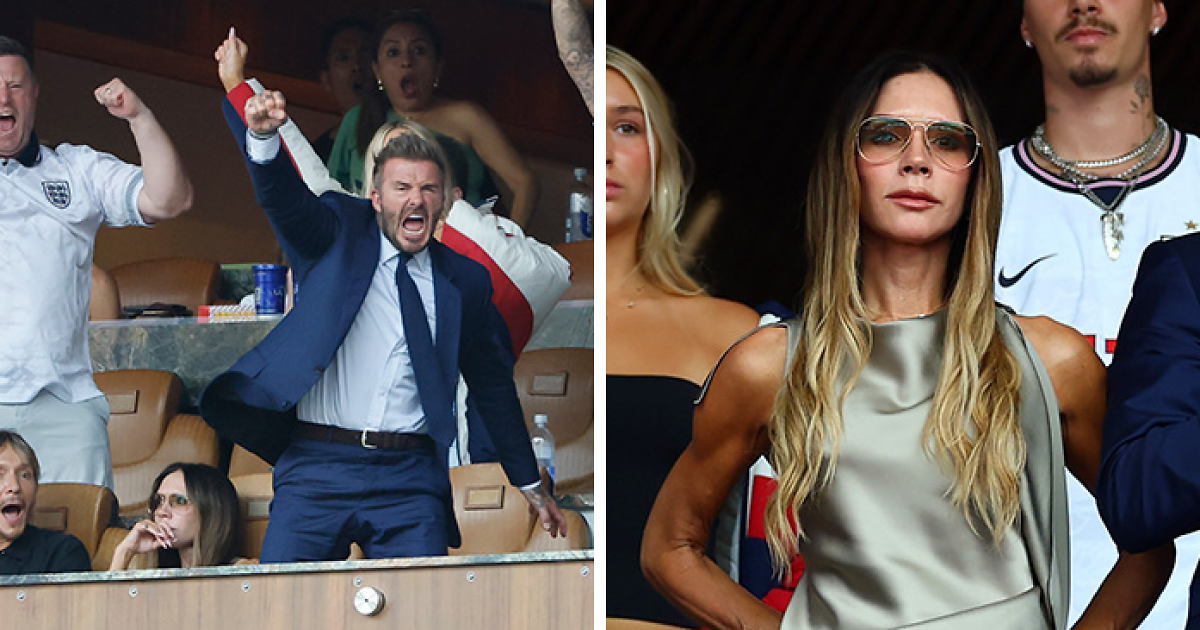
Image credits: Jean Catuffe/Getty Images
Women and football fashion
Women have historically been positioned outside of football culture, something we have spoken about extensively on our Substack. Women, and anyone outside football's traditionally masculine culture are engaging with the tournament on their own terms rather than following established ideas of fandom.
Victoria Beckham has been a fixture pitchside for two decades, though never as a football fan in the conventional sense. For years, her presence was defined by her marriage to David Beckham and accompanied by misogynistic chants that made clear she was not considered part of football culture. Rather than perform fandom, she has remained unapologetically herself, most recently pictured sitting almost motionless as her husband and sons celebrated England's latest victory around her.
That refusal to display genuine fandom has become a way of participating, but taken new forms online, with some women using humour and fashion to lean into an exaggerated version of naivety. Comedian Grace Campbell leaned into female stereotypes of performative fandom; whilst slogan shirts reading “Is it home yet?” and “Football’s coming home, what about me?” showed how women claimed the lingo for their own, inserting themselves in a culture that has historically rejected them, without requiring encyclopaedic knowledge of the game.
Misogyny remains deeply embedded within football, as seen in the continued abuse directed at Declan Rice's partner Lauren Fry. At the same time, fashion has opened up different ways for women to engage with the tournament.
Tolami Benson has also become known for the way she styles England jerseys. Discussion around her outfits has often outweighed conversations about her football knowledge, reflecting a broader shift in how people participate. Style has become another entry point into football culture.
These are just some of the shifts we've been tracking throughout the tournament. Whether through customisation, political dress or changing ideas of fandom, what people wear has become part of how the World Cup is experienced and remembered.
England's campaign may be over, but we'll continue watching how these shifts shape culture through Sunday's final and long after the final whistle.